How Mayors Can Raise Public Safety Standards with AI
Mayors can raise public safety standards with AI. Better documentation, faster reporting, improved transparency. See how AI transforms police operations.


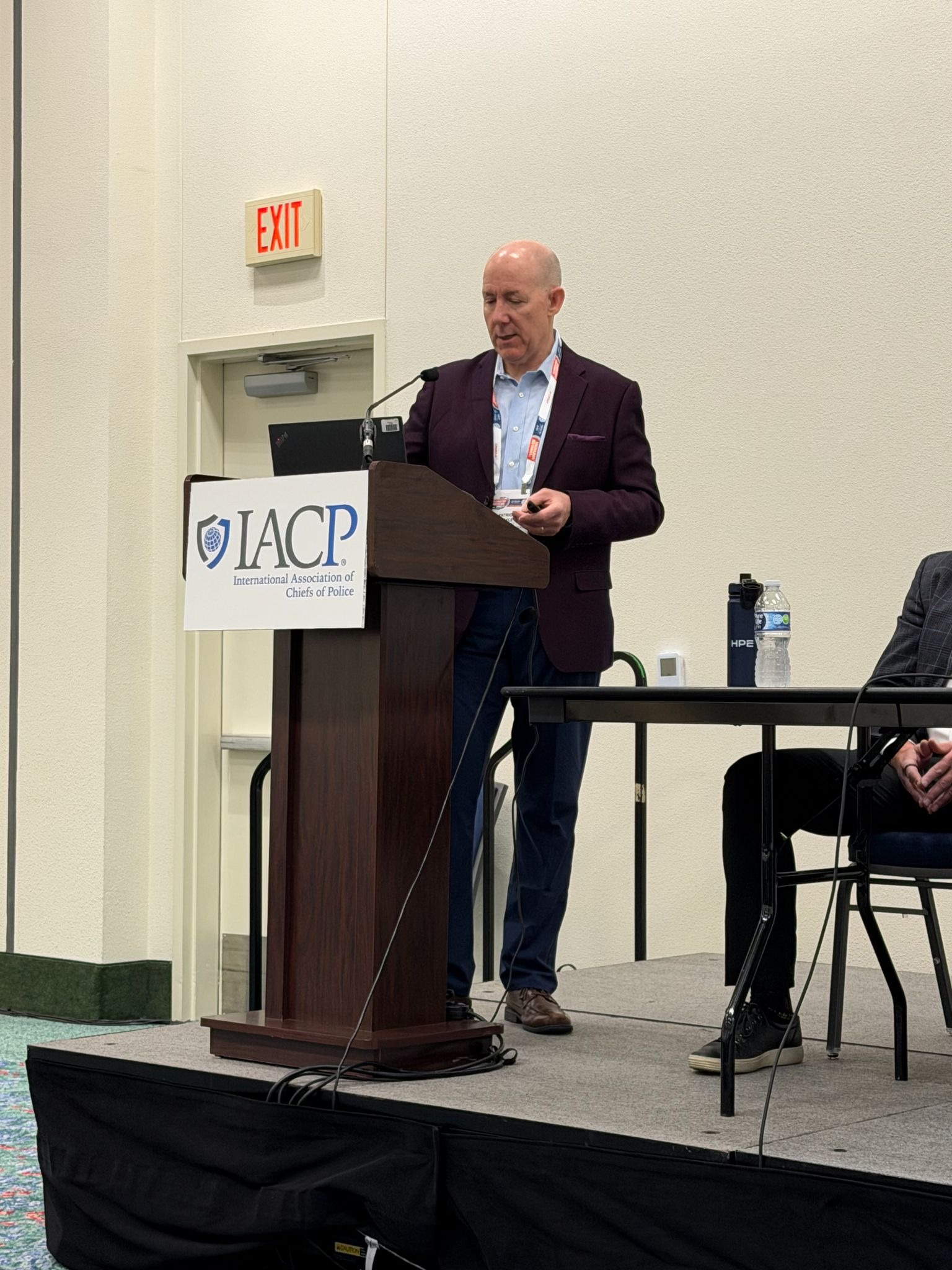
Earlier this month, we were in Dallas for the International Association of Chiefs of Police Tech Conference. We attended a number of incredible sessions. We had a lot of great conversations. But one panel really stuck out to us.
Not because the technology was new. Because something one of the panelists said was impossible to unhear.
Somewhere in America right now, an officer is finishing a shift, pulling out their personal phone, and typing their incident notes into ChatGPT. Not because they were told to. Because nobody gave them a better option. And they're exhausted. And they have three more reports to write before they can go home.
It's already happening. Without policy. Without oversight. Without any of the legal safeguards a department would want in place before AI touches a report that could end up in court.
That's the moment this conversation is really about. Not whether AI belongs in law enforcement. It's already there. The question is whether it arrives with the right framework around it, or without one.
Write as Well as You Speak: Automatic AI-Powered Writing featured four leaders who, collectively, represent AI in the policing conversation. Patrick Doyle, Justice and Public Safety Consultant and retired New Jersey State Trooper, moderated a panel that included Robert Short, IT Director at Benton County Sheriff's Office, who describes himself as the "designated nerd" of his agency; Scott Montgomery, Law Enforcement Operations Lead at Amazon Web Services (AWS) and a fourteen-year police veteran; and Derek Walker, Sergeant and Technology Division Lead at Gooding County Sheriff's Office, with thirty years of law enforcement experience.
No one on that panel was there to sell anything. They were just openly talking, honestly and from experience about what AI police report writing software actually looks like when it meets the reality of law enforcement work.
Here's what we took away…
The framing that opens most conversations about AI and documentation is time. Officers spend too much time writing reports. That's true, and the numbers from this panel made it concrete. One of the panelists described using AI-assistance to reduce report writing time to just over an hour, which previously took six to eight hours. For a department stretched thin, that kind of return can be significant.
But the deeper point the panel made, and the one we found most valuable, is that documentation burden isn't just a time problem. It can also be a presence problem.
When an officer is thinking about the report they have to write, they are less present in the field. When a detective is focused on capturing notes, they're less focused on the person across the table. The documentation doesn't just happen after the work, it competes with it. The panel put language around something law enforcement has lived with for a long time without a good way to name it.
That framing matters to us, because it's the same insight that drives everything we build at CLIPr. The goal isn't to make paperwork faster. It's to give professionals their full attention back, so they can focus on the work that no technology will ever replicate.
Several things stood out from what the panelists shared.
One panelist's department used AI-assist to parse a four-plus hour interview following a suspect confession, (a process that would have taken days), and documented the reduction in time as genuinely "life-altering" for investigative work. The same department used AI to translate eighteen Spanish-language witness interviews in a drive-by shooting case in minutes, eliminating what would have been days of work for a rural agency without a dedicated Spanish-speaking deputy.
These aren't proof-of-concept experiments. They're operational deployments producing measurable outcomes.
The panel addressed the courtroom question directly, which we appreciated. The answer the panelists have landed on is straightforward: officers must be able to honestly testify about how a report was created. The original AI-generated content should be preserved alongside the final edited version. Prosecutors and defense counsel should be informed. A three-tier evidence model: original body-worn camera audio, machine transcription, human-edited final, keeps the chain of custody intact.
The panelists confirmed that in the jurisdictions they're working with, there have been no courtroom challenges to date. That's not because the issue hasn't been considered, it's because they built the right framework before it became a problem.
The AWS perspective on this was direct: private deployment models exist specifically so that an agency's documentation never trains a model that another agency or vendor can access. The question of who owns the data, and what the vendor is contractually permitted to do with it, was identified as a fundamental due diligence requirement before any procurement decision.
The panel was candid that AI police report writing software is not a plug-and-play rollout. Training is critical. Policy development has to precede deployment, not follow it. The agencies seeing results are the ones that treated the rollout as seriously as they treated the purchase decision. One panelist's department piloted with a deliberately mixed group: tech-comfortable officers alongside officers with strong field instincts but weaker written documentation. The goal was to understand adoption across the real range of a department's personnel, not just the early adopters.
Near the end of the session, the panel turned to the question of where AI in law enforcement goes next: surveillance logs, SWAT documentation, forensic interviews with children, undercover operations.
The response was measured and, we thought, exactly right. There are situations where AI has real and valuable applicability. And there are situations where human judgment isn't just preferred, it's required. Use of force decisions. High-stakes tactical calls. Moments where an officer's direct experience, moral authority, and professional judgment are precisely what the situation demands.
The panel was clear: AI is an assistive tool. It is not a replacement for the officer, the investigator, or the expertise they've built over a career.
That's the version of this technology we believe in. And it's the version that law enforcement, and the communities they serve, actually need.
The timing matters. Departments across the country are navigating AI adoption in an environment of budget pressure, public scrutiny, and (as the panel noted) unauthorized use of consumer AI tools by officers trying to solve the documentation problem on their own. When officers are turning to general-purpose AI without guidance or policy, it's a signal: the need is real and the institutional response hasn't caught up.
Panels like this one are part of how that changes. When practitioners, not vendors, stand up at a conference and say "here is what we tried, here is what worked, and here is what you need to have in place before you start," it gives other agencies a framework they can actually use.
We left Dallas with a clearer sense of where law enforcement leadership is in this conversation. They're not resistant to AI. They're asking the right questions about it. About transparency, data ownership, legal defensibility, and adoption. Those are the questions that should be driving this category forward.

If you want to continue the conversation about our key takeaways from Dallas, book a demo with one of our CLIPr team members. We'll be at IACP in Orlando this October, if you’re there, give us a shout and we can schedule time to chat during the conference.