How Mayors Can Raise Public Safety Standards with AI
Mayors can raise public safety standards with AI. Better documentation, faster reporting, improved transparency. See how AI transforms police operations.


By Humphrey Chen, CEO, CLIPr
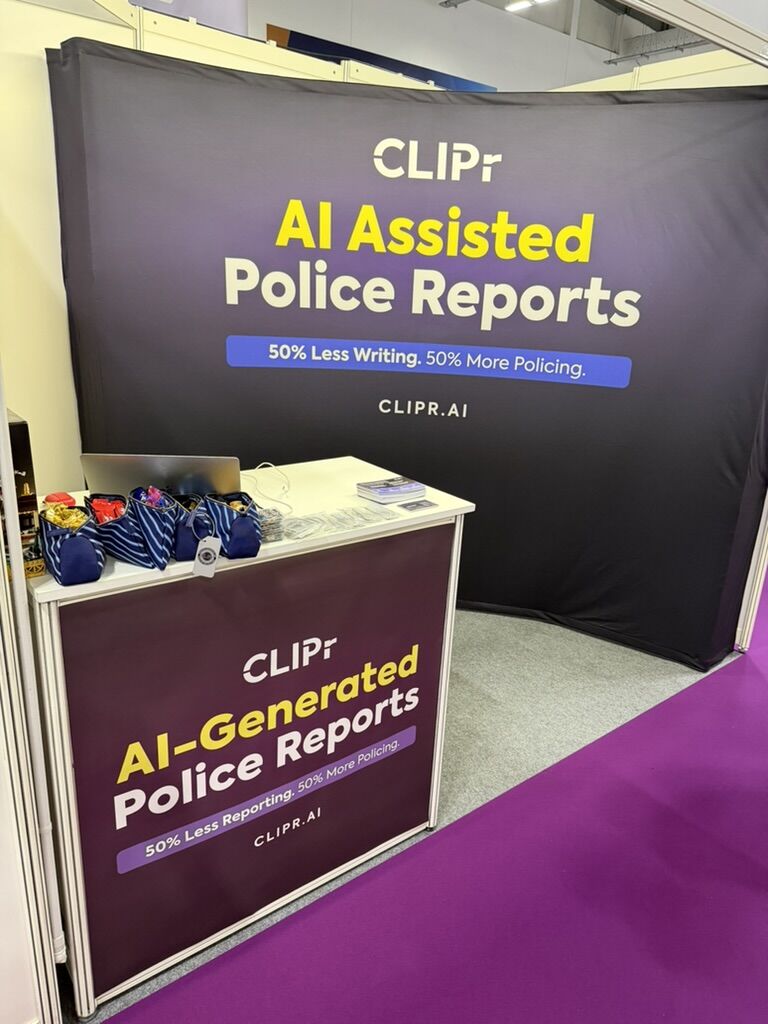
CLIPr recently attended two of the most influential policing conferences of 2026: Security & Policing in the UK, and the CACP Information & Communications Technology Summit in Canada. Together, they offered a clear view of where law enforcement leadership stands on artificial intelligence and where it is headed.
At both events, only a handful of companies were actively representing AI solutions built for public safety agencies. That is not a sign that AI isn’t being discussed. It is a clear indication that AI is still being carefully evaluated, examined, and approached with thoughtfulness.
We left both events energized from the conversations. Not just because of the relationships we built or the doors that opened, but because of what the conversations revealed about the future of AI in policing and how CLIPr can help guide that future responsibly.
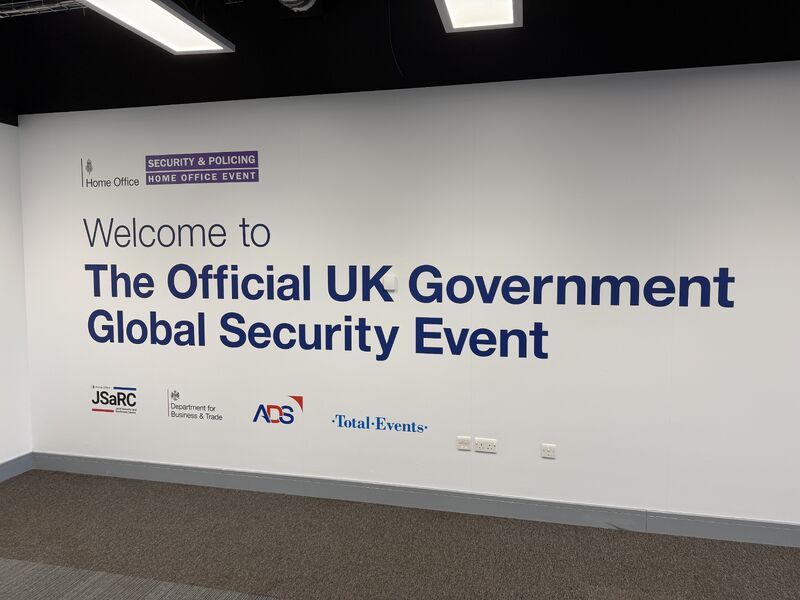
These are not just technology conferences. They are policing conferences. The people in the room are chiefs, commanders, investigators, and public safety leaders whose daily reality is managing complex, high-stakes environments with limited resources and growing expectations.
Representing AI in this space carries real responsibility. For us, this means:
We were honored to be among the few AI companies invited into these conversations.

Despite different geographies, the same questions continued to resurface.The questions weren't theoretical; they were grounded in the reality of the job.
Here is what law enforcement professionals were actually asking:
This is the question underneath every other question in patrol. Officers aren't looking for a smarter system, they're looking for fewer systems. The documentation burden is real, it's significant, and it's pulling time away from the street. The ask is simple: give that time back, without adding friction to do it.
For investigators, the concern wasn't about technology, it was about focus. The interview room demands full presence. The moment an investigator is thinking about their notes, they're not fully in the room. CLIPr's role here is not to change how interviews are conducted or to direct the investigator. It's to ensure that nothing gets lost while they happen, so the investigator can stay where they need to be.
For leadership, the conversation extended well beyond time savings. Chiefs are thinking about sustainability, burnout, retention, and the ability to attract the next generation of officers. The strongest signal across both conferences: this is no longer just about efficiency. It's about the long-term health of the workforce.
The officers we’ve built CLIPr for didn’t join the force to spend half their shift on paperwork. The detectives we work with didn’t develop years of investigative instinct so they could spend an interview hastily jotting down notes on a notepad.
The role of AI in public safety is not to replace human expertise. It’s to protect it. This is the driving mission behind CLIPr.
To give people their time and attention back so they can do the work that no technology will ever replicate. It's about the work that happens between people, in a room, in the field, in a moment that matters.
That's what presence over paperwork means to us. And that's the version of AI we were proud to bring to these conversations.
AI is often positioned as a way to be faster, smarter, and more powerful, but it leads with technology instead of trust.
That's not the version law enforcement needs. And that’s not the version that will last.
Through conversations at events like these and working alongside officers, detectives, and chiefs across the US, UK, and Canada, is that effective AI in policing has to be built on a different foundation entirely.
It has to be invisible in the right moments. The best documentation tool is one that doesn't interrupt the work. An officer conducting an interview, a paramedic on scene, a detective in the room, they are there to do a job that requires their full presence. AI that demands attention is AI that creates risk. The goal is to materially reduce the documentation burden, not to add another layer to it.
It has to be transparent by design. Every output CLIPr generates comes with a human-reviewable draft, a clear record of what was captured and how, and an auditable trail that holds up to scrutiny. This isn't a feature. It's the baseline for any AI that wants to operate in law enforcement with credibility.
It has to earn trust incrementally. At both events, we were able to have open and honest conversations. That happened not because we sold the technology, but because we listened. We focused on what agencies needed, what concerns they had, and what success actually looked like for them.
It has to account for the human in the room. Across every vertical CLIPr serves — policing, fire and EMS, government, insurance — the same truth holds: professionals do their best work when they're fully present with the person in front of them. AI should protect that presence, not compete with it.
Policing is local, but the challenges are global.
Documentation burden, staffing pressures, public scrutiny, and the need for defensible evidence - These aren’t unique to any one country. What we found at these events was a shared appetite for solutions that respect the complexity of the job. Different regulatory contexts, different procurement processes, different cultural expectations, all in with the same fundamental need: Tools that help officers focus on policing.
CLIPr’s presence at both events reflects our commitment to serving law enforcement wherever that need exists.
Walking away from both events, a few things clearly stood out.
Thank you to the agencies, associations, and leaders who welcomed us into these conversations. These events set a standard for how law enforcement engages with emerging technology.
Book a demo to learn more about CLIPr.