How Mayors Can Raise Public Safety Standards with AI
Mayors can raise public safety standards with AI. Better documentation, faster reporting, improved transparency. See how AI transforms police operations.


Paramedics and EMTs didn't get into emergency medicine to spend hours writing reports. Yet that's precisely where too much of their time goes. In EMS, nearly 60% of leaders cite documentation and reporting as their most significant challenge affecting operations.
Between patient assessments, vital signs, interventions, and transport details, EMS documentation demands precision. But the traditional process of typing up reports from memory after a shift full of calls creates a painful trade-off. The longer you wait, the harder it is to recall critical details. Rush through it, and you risk incomplete records that can affect patient care, compliance, and reimbursement.
AI for EMS operations is changing this process. By automating the most time-consuming parts of EMS documentation, AI tools are helping agencies cut report time in half while actually improving the quality of their records.
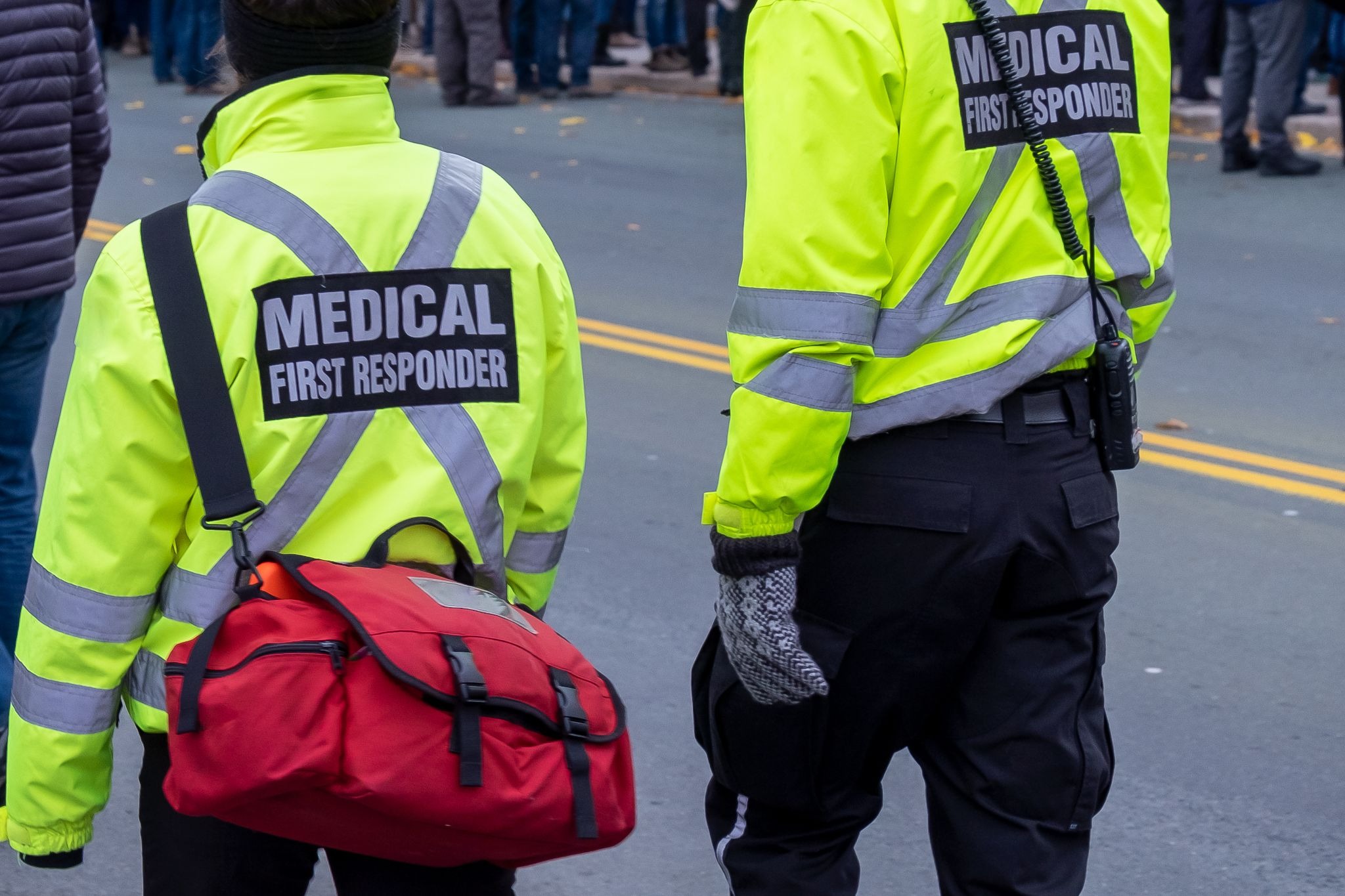
This can vary by source, but the common figure is that EMS providers spend up to two hours per shift on paperwork. Valuable time that could be spent on patient care, training, or simply recovering between calls.
That number adds up fast. Across a department, it translates to thousands of hours annually that pull crews away from their primary mission. And because most documentation happens after patient handoff, providers are working from memory, sometimes hours after the fact. Details can get missed. Timestamps can blur together. The result is reports that don't fully capture what happened, even when the care itself was excellent.
AI captures observations in real time during patient encounters, eliminating recall errors and ensuring reports reflect what actually happened.
Modern EMS documentation automation tools use audio from body-worn devices or dedicated recorders to transcribe provider-patient interactions as they occur. When a paramedic verbally notes a patient's symptoms, vitals, or responses to treatment, that information goes directly into the documentation. No more mental note-taking, no more trying to reconstruct a timeline after running three more calls.
AI transcription for public safety achieves 90-95% accuracy, with the ability to learn department-specific terminology and improve over time. Providers review and edit the draft rather than starting from scratch. This is a fundamentally different workflow that produces more detailed records in less time.
AI-powered documentation can automatically structure reports to meet NEMSIS requirements, reducing compliance risks and the frustration of rejected submissions.
NEMSIS compliance isn't optional. The National EMS Information System sets the data standards that state and federal agencies require, and the recent transition to version 3.5 has introduced new fields and stricter validation rules. Manually ensuring every patient care report hits these standards is tedious and error-prone.
Incomplete or vague patient care reports are the leading cause of denied ambulance claims, costing agencies revenue they've already earned.
Medicare and insurance payers require detailed documentation of medical necessity. A report that says "patient complained of chest pain" doesn't cut it. Payers want specifics: onset, severity, associated symptoms, interventions provided, and patient response. When documentation falls short, claims get denied, and the revenue gap falls directly on department budgets.
AI documentation captures these details naturally during the call, producing audit-ready public safety reports that demonstrate medical necessity without requiring providers to think like billers. The result is fewer denials, faster reimbursement, and less time spent on appeals.
By automating the most draining administrative tasks, AI lets responders spend less time at desks and more time doing the work that brought them to EMS in the first place.
Staffing shortages are hitting EMS hard. Agencies can't afford to lose experienced providers to burnout, and endless paperwork is consistently cited as a major contributor. When documentation becomes faster and less mentally taxing, providers have more capacity for patient interaction, skill development, and the recovery time that high-stress work demands.
AI in public safety acts as a force multiplier, allowing existing teams to handle their workload without the administrative pile-up that leads to exhaustion and turnover.
Implementing AI documentation is simpler than most agencies expect.
Platforms like CLIPr integrate with existing body-worn cameras and recording devices, automatically processing audio to generate draft reports. Providers can record from their tablet (iPad/Android) or smartphone (iPhone/Android) via their CLIPr Mobile App, dock their devices, receive a draft via email, review and edit as needed, then copy the finalized report into their records management system. No complex training required, no disruption to existing workflows.
For EMS agencies ready to give their teams time back while improving documentation quality, AI isn't a future possibility, it's available now.
Request a demo to see how AI-powered documentation can transform your agency's reporting process.